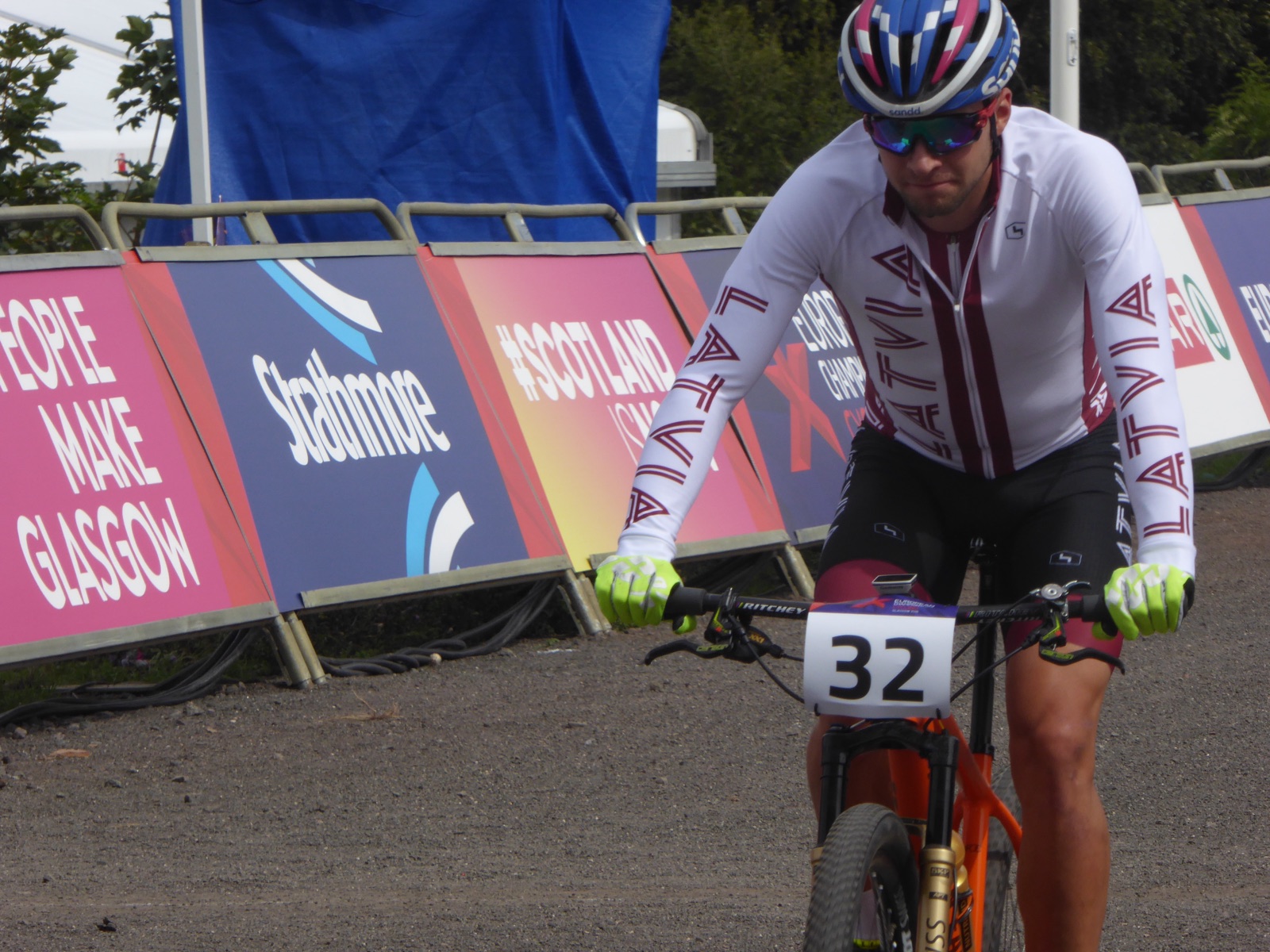
“Cross-country” describes a riding priority, not a guarantee of race-only discomfort. The category covers lightweight hardtails and short-travel full-suspension bikes, yet both are designed to turn pedalling into forward progress with little wasted motion. That makes them attractive for German Mittelgebirge tours built from forest roads, long climbs and moderate singletrack. It also means the rider receives more feedback from the ground and has less suspension in reserve when a descent becomes steep, loose or repeatedly rough.
Geometry puts work ahead of rescue
An XC cockpit normally places the rider in an engaged position that is effective for sustained power. Modern examples are less nervous than older race bikes, but their steering and weight distribution still favour accuracy. On smooth climbs this feels alert and rewarding. On a slow, rocky descent, the same character can demand better body movement than a longer, slacker trail bike.
Fit therefore matters before frame mass. A low front end that looks purposeful may load hands, neck and lower back over a six-hour day. Check whether the handlebar height, reach and saddle position allow relaxed breathing and light hands while seated. A short demonstration ride should include tight turns, a standing climb and firm braking—not merely a spin across a flat car park.
Suspension, tyres and the usable margin
A hardtail has one suspension fork and a rigid rear triangle. It is mechanically simple and direct under power, but the rear wheel skips more readily over braking bumps and roots. A short-travel full-suspension XC bike adds traction and reduces repeated impacts, at the cost of pivots, shock service and some mass. Neither becomes a long-travel trail bike simply because the suspension has several settings.
Tyres often change the ride more than a small difference in frame weight. Appropriate width, casing and pressure provide braking grip and protect the rim. Very light race casings can feel quick but offer less protection on stony upland tracks. Choose for the roughest surface you ride regularly, then set pressure for rider mass, tyre volume, rim width and conditions. Copying another rider’s number without that context is unreliable.
| Decision | Likely gain | Likely cost |
|---|---|---|
| Hardtail frame | Simplicity, direct power | Less comfort and rear grip |
| Short-travel suspension | Control over repeated impacts | More setup and service |
| Light tyre casing | Lower rotating mass | Less puncture and rim protection |
| Low cockpit | Strong race position | Potential long-day strain |
Gearing and brakes must suit the route
A wide-range single-chainring drivetrain simplifies shifting and retains the chain well on rough ground. The smallest climbing gear must still be low enough for local gradients after several hours; “enough” on a fresh ten-minute hill may be too tall with tired legs. Bigger chainrings offer more high-speed range, but they do not improve the climb.
Brake feel, rotor size and heat management deserve more attention than component hierarchy. Long German forest descents can create sustained heat even when the trail is not technically difficult. A heavier rider or repeated steep riding may justify more powerful brakes than a pure race specification supplies. Correct setup, fresh pads and a bedded-in rotor matter more than a fashionable label.
Who should choose it?
An XC bike suits riders who value covering ground, enjoy active handling and are prepared to select lines rather than charge through everything. It can be an excellent all-day machine for signed MTB networks with substantial climbing. It is a poor shortcut for a rider who wants upright comfort, large luggage capacity or maximum confidence on steep technical descents.
Bottom line
The category’s honest advantage is not glamour but efficiency: less energy absorbed by the bicycle on climbs and rolling ground. The honest trade-off is a narrower recovery window. Pick an XC bike because your recurring routes reward pace and precision, not because “race” sounds like an upgrade.