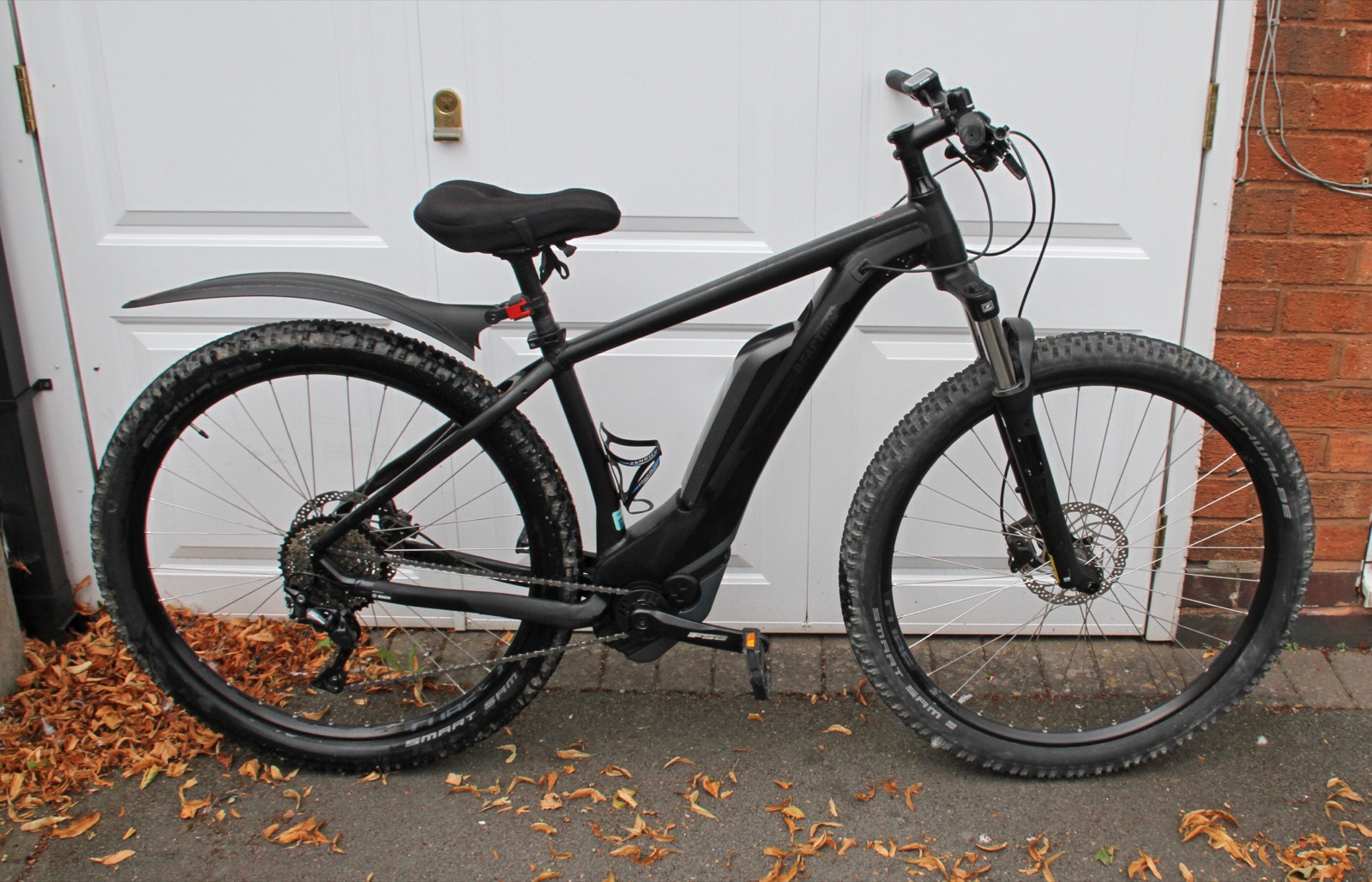
A trail e‑MTB combines a mountain-bike chassis with pedal assistance. The useful question is not whether assistance is “cheating”; it is whether the complete system fits the intended rider, route and logistics. Support can smooth differences in fitness, make repeated climbing enjoyable and extend exploration. The system also creates a bicycle that is heavier to steer, harder to carry and more dependent on compatible electronics than an unassisted equivalent.
Read motor behaviour, not only torque
Peak torque is easy to compare and difficult to interpret alone. Control at low cadence, how naturally support begins, and how predictably it stops can matter more on a loose switchback. A powerful response may feel lively on a fire-road climb but abrupt when traction is limited. Try several modes on a real slope and pay attention to whether the bicycle follows small pedal inputs without surging.
Support legally remains pedal assistance within the relevant classification; it is not permission to use every path. German access rules and local land-manager restrictions depend on location and vehicle category. Verify the current route source and signage rather than assuming that a route marketed for “MTB” automatically treats every assisted bicycle identically.
Battery range is a scenario
A battery’s nominal capacity is factual; the distance it delivers is conditional. Rider mass, climbing, surface resistance, temperature, tyre pressure, support mode, wind and stop-start riding all influence consumption. A range estimate produced on mild rolling asphalt should not be transferred to a cold mountain day. Build a conservative energy budget from comparable rides and keep a reserve for diversions.
Charging is logistics, not a vague hope. Confirm that an overnight stop actually permits secure battery charging, that the charger travels with you, and that connectors and keys are packed. Do not plan around an unverified café socket. A removable battery can simplify indoor charging but introduces its own latch, key and sealing checks.
| System | Useful question | Failure to plan |
|---|---|---|
| Motor response | Is support predictable on loose climbs? | Wheelspin or awkward surges |
| Battery | What is the conservative ascent budget? | Heavy unassisted return |
| Brakes | Can they manage system and rider mass? | Heat and fading control |
| Transport | Can the bike be lifted and carried? | Blocked station, stairs or gate |
Mass changes handling and equipment
Extra mass can make an e‑MTB feel planted through rough ground, yet it asks more from tyres, wheels and brakes. Direction changes need anticipation. Lifting the front wheel over a step and correcting a poor line require different timing from a light bike. Strong brakes and suitable rotors help manage repeated descent, while robust tyres protect against impacts from a heavier system.
Suspension must be set for total riding mass, including water and luggage. Excessively soft settings use travel early; excessively firm settings lose traction. Record baseline pressure and damping positions, then make one change at a time. The electronics deserve an equally ordinary routine: inspect charging ports, battery security and visible cable damage without opening components the manufacturer assigns to trained service.
Service and transport are part of ownership
Choose a motor system with realistic local diagnostic and parts support. A conventional drivetrain issue may accept a generic repair; a display, sensor or battery fault can be system-specific. Ask who handles warranty and out-of-warranty diagnosis, and what happens if the exact battery generation changes.
Also rehearse transport. Many vehicle racks have individual and total weight limits, some trains have restricted bicycle capacity, and stairs can turn a small delay into a serious problem. Removing a battery may reduce lifting mass, but only if it is designed to be removed safely.
Bottom line
A trail e‑MTB is compelling when assistance has a defined purpose: managing elevation, balancing a group or returning to riding within realistic limits. Buy the complete support ecosystem—handling, brakes, charger, service and access understanding—not merely the largest torque number.