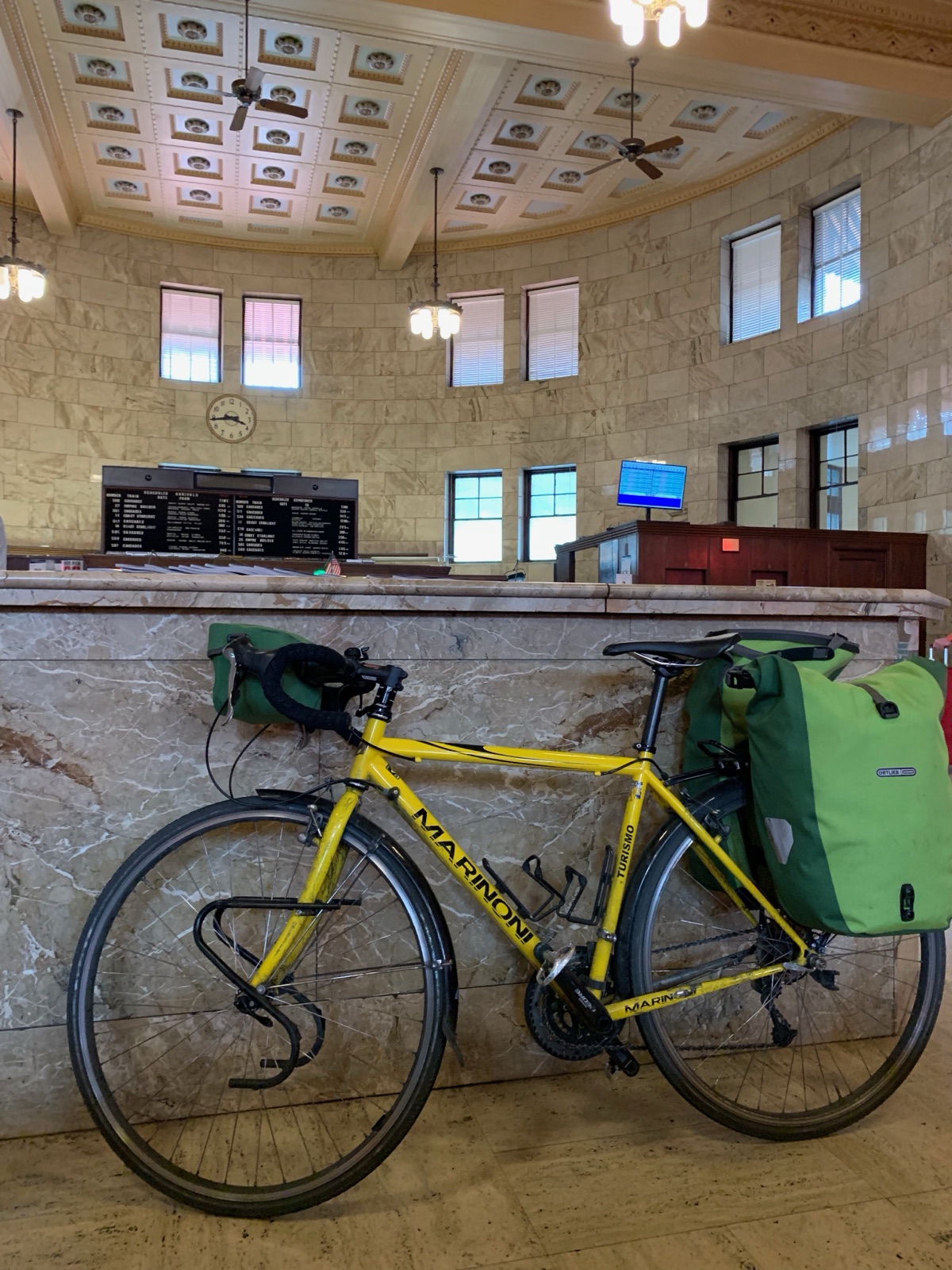
The touring bicycle is easy to overlook because it is optimised for continuity rather than spectacle. It must hold a comfortable position, carry luggage without wagging, stop reliably in poor weather and accept routine repairs. That often produces a longer wheelbase, strong wheels, generous gearing and mounting points. The bicycle may feel restrained during an unloaded sprint, yet become convincing when a week’s equipment is attached.
Loaded fit is the real fit
Touring position should let the rider change hand placement, look ahead without neck strain and produce steady power for hours. “Upright” is not automatically comfortable if the saddle, reach or bar shape is wrong. Nor is a low position automatically efficient once shoulders tighten and hands go numb. Evaluate the whole posture in the shoes and clothing used for travel.
Load changes the bicycle’s balance. Rear panniers placed too far back can lighten the front wheel and encourage shimmy; an overloaded handlebar bag can slow steering. Good rack geometry keeps panniers clear of heels and locates mass between the wheels where practical. Test ride with representative weight rather than judging the frame empty.
Racks and panniers make access simple
Traditional panniers offer clear compartments and fast removal. They are convenient for accommodation, shopping and wet-weather access, and a stable rack prevents the bag movement common to oversized saddle packs. Their disadvantages are width, aerodynamic drag, rattling hardware and a greater chance of striking obstacles on narrow paths.
Confirm both rack and frame load ratings. A strong-looking rack is not evidence of unlimited capacity, and small fasteners still require correct installation. Pack the left and right sides with similar mass, keep dense items low, and use retention hooks as designed. A waterproof pannier still needs its closure rolled or latched correctly.
| Area | Look for | Avoid assuming |
|---|---|---|
| Fit | Sustainable posture and hand choices | More upright always means comfort |
| Wheels | Sound build and suitable load rating | More spokes alone guarantee strength |
| Gearing | Low ratios for loaded gradients | Unloaded test hills are equivalent |
| Parts | Serviceable, available standards | Premium equals repairable everywhere |
Low gearing protects the itinerary
A heavily loaded bicycle needs lower climbing gears than the same rider uses on day trips. The goal is not to conquer a single steep pitch at maximum effort; it is to repeat climbs without turning the next day into recovery. Compare gear ratios, not the number of gears. A smaller front ring and sufficiently large rear sprocket can be more valuable than a tightly spaced racing cassette.
Braking must account for total system mass and long descents. Disc brakes can provide strong all-weather control, while well-maintained rim brakes remain familiar and serviceable on suitable wheels. Each system has inspection needs. Carry compatible pads, know how to check wear, and avoid dragging a brake continuously until it overheats; use controlled intervals while maintaining a safe speed.
Durability includes wheels and small fittings
Wheel quality depends on rim, hub, spokes, tension and build, not one headline number. Luggage loads magnify poor tension and loose fasteners. Before a long trip, inspect rack bolts, mudguard stays, tyre condition and spoke tension. After the first loaded days, repeat the check because new installations settle.
Serviceability should match the journey. Integrated systems can be clean and dependable, but a very unusual part may be difficult to replace away from home. This does not mean every bicycle needs old technology; it means the owner should understand which failures accept an ordinary workshop solution and which require a specific dealer or component.
Where a tourer is the wrong tool
A touring bike with suitable tyres can handle maintained gravel and many forest roads. It does not gain suspension travel, ground clearance or mountain-bike handling because panniers are removed. Repeated rock steps, narrow technical trails and aggressive descents can overload equipment and rider. For routes dominated by such ground, choose a mountain bike and a luggage system designed around it.
Bottom line
A tourer succeeds by reducing surprises. Stable handling, low gearing, practical mounts and maintainable parts help ordinary days connect into a journey. Its calm behaviour is not dullness; it is performance measured across distance rather than a showroom lap.