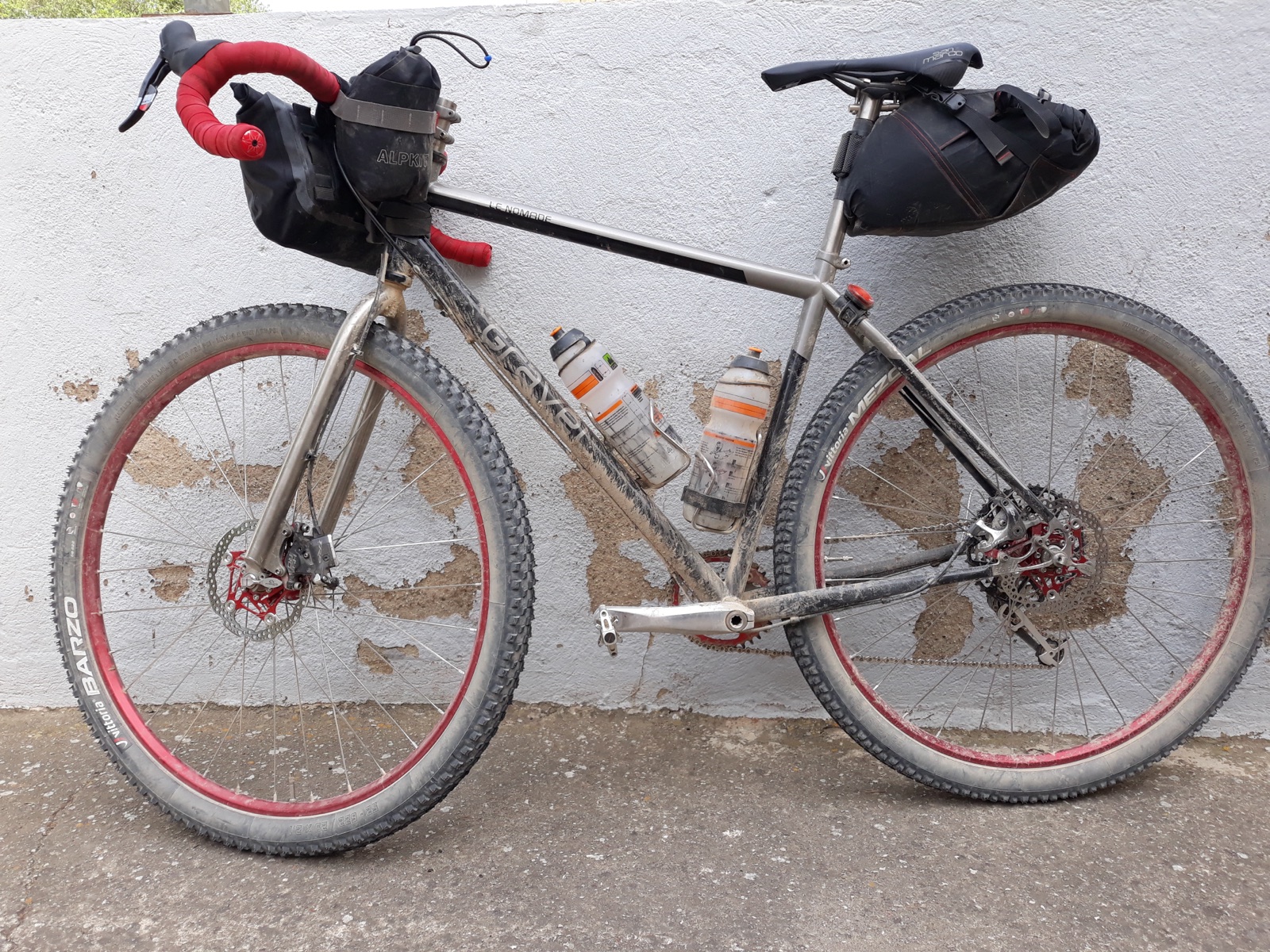
A bikepacking rig is not a particular frame material, handlebar or tyre tread. It is a bicycle and luggage arrangement designed around a journey. A gravel bike can carry it; so can a hardtail, rigid mountain bike or adapted touring machine. The meaningful differences appear when the bags are full: steering becomes heavier, the saddle pack may sway, bottles become harder to reach, and components once accessible are hidden behind straps.
Choose the base bicycle by surface
Begin with the roughest recurring ground, not the smoothest transfer. Firm forest roads and cycleways may suit a gravel bike with sufficient tyre volume. Rooted tracks and sustained rough descents give a mountain bike’s flat bar, lower gearing and larger tyres a clearer advantage. A rigid frame reduces service needs, while suspension may preserve control and comfort at the price of maintenance and reduced front-bag clearance.
Fit must work before luggage is added. A long route exposes pressure on hands, shoulders and contact points; moving a bag cannot solve an unsuitable reach. Check that tyres clear the frame with mud space, that the lowest gear remains genuinely low under load, and that brakes can manage rider, cargo and repeated descent.
Every bag spends space twice
A full-frame bag uses the central, stable area but often removes normal bottle positions. A large saddle bag keeps the sides clear yet can sway, interfere with a dropper post or rub the rear tyre if poorly fitted. A handlebar roll may compress cables, obscure a light or contact the front tyre when suspension moves. Fork-mounted cargo adds capacity but also unsprung or steering mass, depending on placement.
Install each bag with the bicycle fully configured. Compress suspension, turn the bar from lock to lock and test the lowest saddle position. Protect paint where straps touch, then recheck tension after the first rough hour. A system that appears neat in a living room can move significantly on corrugated tracks.
| Location | Best use | Main caution |
|---|---|---|
| Frame bag | Dense, frequently used items | Displaces bottles; affects knee room |
| Handlebar roll | Light, bulky sleep equipment | Cable, light and tyre clearance |
| Saddle bag | Clothing and low-density cargo | Sway and tyre clearance |
| Fork cargo | Balanced extra volume | Mount rating and steering feel |
Pack by density, access and consequence
Heavy items belong low and close to the frame when mounts permit. Bulky light items can move toward the handlebar or saddle. Separate things needed during the day—rain shell, food, map, first aid—from a sleep system that can remain compressed until camp. The repair kit must be reachable without unloading the bicycle on a wet roadside.
Waterproof fabric does not make every closure or seam waterproof. Treat sleep clothing and insulation as critical: use a dependable inner dry bag and close it consistently. Keep wet shelter fabric separate from dry layers. Test the complete packing order at home, then perform a local overnight ride before committing to several days.
Capacity is not an invitation
Soft bags reward restraint. Additional volume is quickly filled, and extra mass weakens climbing, braking and handling. Count shared items in a group, decant only sensible quantities, and avoid packing for every imagined problem. At the same time, “ultralight” is not a reason to omit insulation, lights, repair essentials or enough water for a sparse section.
Consider how the system behaves away from riding. Can the bicycle be secured while the essential bags come indoors? Can valuables and documents be removed quickly? Are straps replaceable? A small set of spare straps and a deliberate locking plan often matters more than another storage pouch.
Bottom line
Bikepacking works when it is treated as an integrated transport system. The best-looking layout is irrelevant if it compromises steering, tyre clearance or dry sleep equipment. Let surface select the bicycle, let consequence select the packing order, and let a real shakedown ride reveal what the photograph cannot.